How to search Findmypast's parish records
4-5 minute read
By The Findmypast Team | February 6, 2020
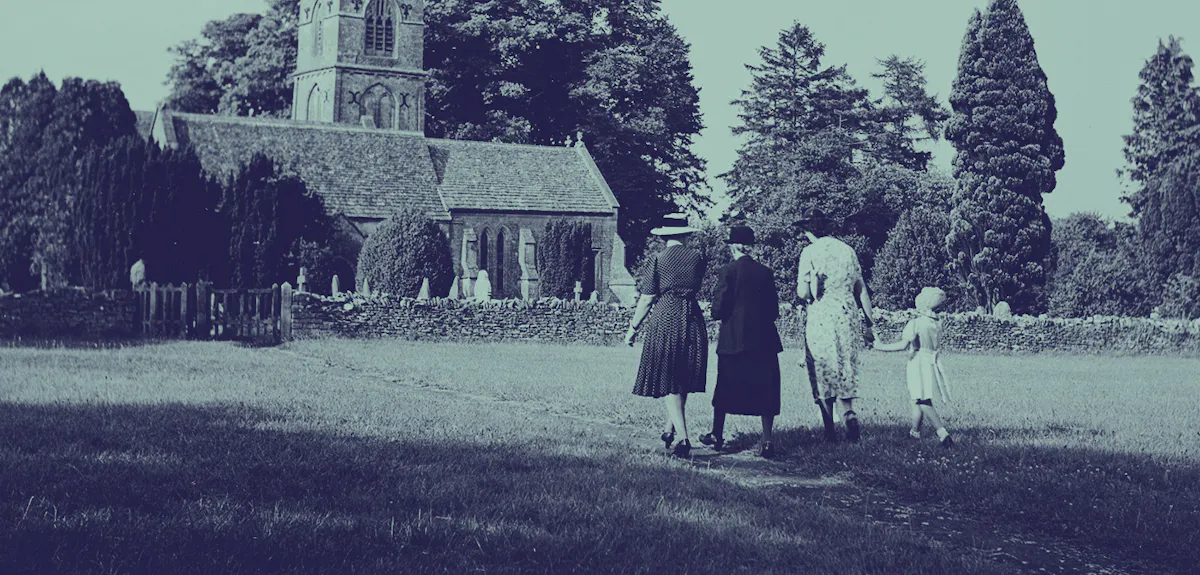
Thanks to our exclusive partnership with the Federation of Family History Societies, we have the largest online collection of UK parish records, giving you the chance to take your family history research back through the centuries to medieval Britain.
In this post, we'll run you through exactly what parish records are, why they're important and how to search the collections to find your family's records.
What are parish records?
In the 1530s, a combination of events, new pieces of legislation, the politicking of Thomas Cromwell and Henry VIII's desire to divorce Catherine of Aragon in favour of Anne Boleyn led to Henry's ex-communication and a split with Rome.
In 1538, the new religious regime – the Church of England – decreed that records of baptisms, marriages and burials must be kept by every parish in the country. These parish records were to be kept up to date on pain of fine, recording in detail the lives of local families.
At first, some parishes neglected to complete the records, ignoring orders and potential punishment. Eventually, however, they were brought into line. Barring the English Civil War, records were consistently kept until 1837, when control was passed to the crown rather than the church, and records began to look more like the ones we recognise today. This is great news for family researchers – and transcription operators – but the images that accompany many of the parish record transcripts are, undeniably, beautiful.
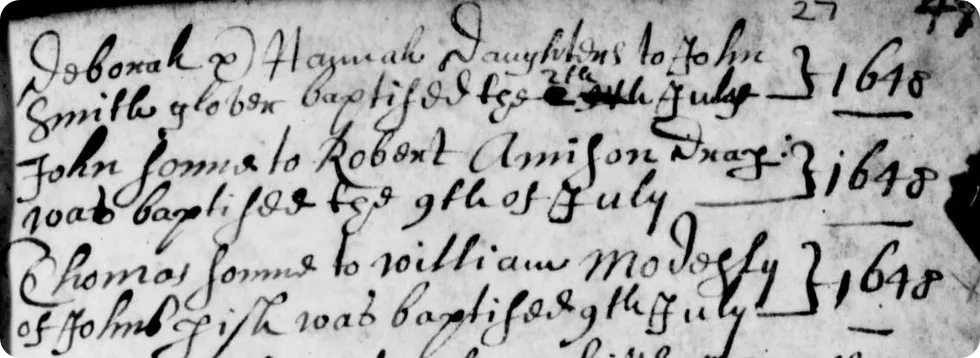
A handwritten baptism record from over 350 years ago.
The parish records were transcribed and indexed mainly by family history societies, although a few dedicated individuals have also contributed data. You can contact the society or group that extracted the information for further details. Some may charge a small fee for research. Details can be found on search results pages.
Searching parish records
If you're searching for your family in the parish records, the chances are you're not new to family history research. You've probably built your family tree up to the 18th century, and so don't need a beginner's guide to search. Here, we'll give you a few advanced tips on how to explore these fascinating collections.
Unearth entire families in baptism records
Search baptisms by father's last name and mother's maiden last name to get all the babies born to that marriage (you can put in a registration district and a range of years, say 10 or 20 years either side, to narrow down if there are too many results with the same surname).
Browse the entire collection
In some of our parish record collections with images you have the option to browse through the registers – handy if you can't find a record by searching. The record you're looking for might have been mistranscribed or the page might be missing from the register or too faint/damaged to read.
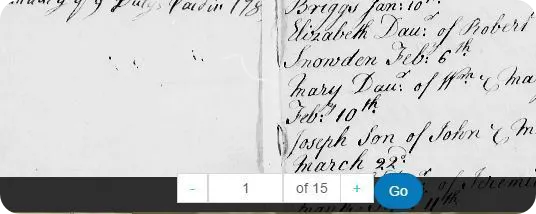
Here's how to make the browse the records:
- Type "browse" in the A-Z and then look for the parish record collection you're interested in
- Go to the relevant register and thumb through (use the tool at the bottom of the image viewer to jump to the right place in the register as shown in the image above).
Use wildcard searches
When dealing with records as old as the 16th century, accurate transcription isn't always easy and spelling wasn't necessarily accurate to begin with. This means that you may have trouble finding people when searching by name. For this reason, wildcards may be your friend.
A wildcard is denoted by a *, and you can use them anywhere in the first, middle or surname fields (but either the first or last name must have at least three initial characters). For example, if you want to search for Michael Addams you could search for Mic* *dams or Mi* Add*.

Searching for Mi* Add* will bring back results that include Michael Addams, Mickcill Addames, Millimay Addams and Mis Katharine Adderley (all real results).
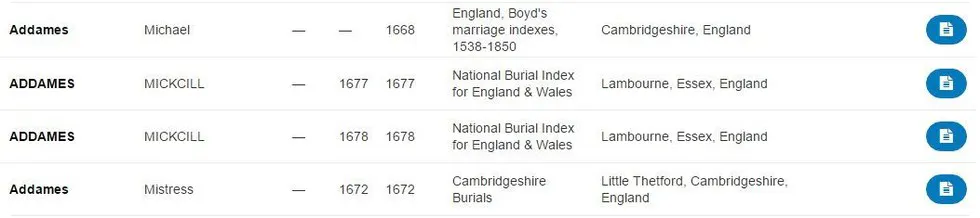
*NB* you can't use search variants with wildcard searches.
Get to know the Julian and Gregorian calendars
It wasn't until 1752 that the Gregorian calendar was adopted in Britain. Until 1752, the Julian calendar was still observed, and the year officially started on 25 March. While Britain clung on to the Julian Calendar, much of Europe had already made the transition. This means that in some cases you'll see two dates in what is known as double dating. For example, you might see 16 January 1746 "OS" (old style) and 1747 "NS" (new style) on the same entry.

An example of both the Julian and Gregorian calendars in use in parish records. Note the 1703/4 to the right of this entry.
If you see a date in an index from between 1 January and 24 March and before 1752, ensure that the double dating problem has been taken into account. If you can't find the entry in the year you're expecting it, try a year either side.
Watch out for the Civil War Gap
The English Civil War ran from 1642-1651, and during this period record-keeping wasn't necessarily top of everyone's list of priorities. If you're looking for family records from around the mid-17th century, this is always worth bearing in mind.
To see the full list of family history societies and organisations that have made incredible contributions to our parish records collection and online family history research in general, visit our partners page.

Related articles recommended for you

How to find the maiden names of women in your family tree
Help Hub
An expert's guide to house history: here are the key sources you'll need to discover the history of your house
Help Hub

Remember the lives of your ancestors with Norfolk memorials and so much more
What's New?